Prototype 01
The E1
The first one. A 1973 Impala, converted to electric, built in the open — including the parts that fought back.
The donor car
The E1's donor car is confirmed: a 1973 Chevrolet Impala with a V8 still under the hood and near-zero rust. It doesn't run yet, and it needs a full repaint and a new interior before build day — that work happens ahead of the electric conversion, not instead of it.
Donor confirmed. Everything else below still gets nailed down before build starts — we're not guessing at the rest.
| Year / model | 1973 Chevrolet Impala |
|---|---|
| Body style | TBD |
| Condition at intake | Non-running. V8 currently installed. Near-zero rust. |
| Interior | Needs full replacement |
| Wheel package | TBD |
| Paint | Needs full repaint |
| Build start | TBD |
What the E1 has to prove
The stance survives
The car sits the way a donk is supposed to sit when it's done. If the conversion changes the stance, the conversion failed.
The pack goes low
Battery mass between the rails and under the floor — lowering the center of mass instead of adding to the problem.
Brakes match the wheels
Stopping power specified against the actual rolling diameter, with regen carrying the everyday load.
It drives like a car, not a science project
Range, charging, heat, and 12V accessories all handled. Turn the key equivalent, and go.
It's repeatable
Every part of the E1 that works becomes a module in the E-Box. Every part that doesn't becomes a note.
Build phases
- Phase 1TBD
Teardown and baseline
Strip to the shell, measure everything, document rust, frame condition, and where the car actually sits before anything changes.
- Phase 2TBD
Chassis and suspension
Front geometry, rear setup, and ride height targets for the wheel package. This is where the truck-part workarounds get designed out.
- Phase 3TBD
Pack and drive
Battery tray, module layout, motor and reduction, mounts, and the weight distribution math that comes with it.
- Phase 4TBD
Brakes, power electronics, charging
Brake package sized to the wheels, inverter and DC-DC placement, onboard charger, port location, HV safety.
- Phase 5TBD
Cooling, HVAC, 12V
The unglamorous half. Loops, radiators, cabin heat and A/C without an engine to borrow from, and the whole low-voltage side.
- Phase 6TBD
Body, paint, interior
Radiused fenders, bodywork, candy, glass, stitching, and the system. The part everybody photographs.
- Phase 7TBD
Shakedown
Road miles, thermal testing, brake testing, range validation, and the list of things to change on the next one.
Target Specifications
Development targets, not dyno-verified production figures. Anything not yet confirmed stays marked TBD — we'd rather leave it blank than put a number on the internet we can't back up.
| Donor car | 1973 Chevrolet Impala (confirmed, non-running) |
|---|---|
| Wheel size | TBD — 26" platform design point |
| Motor | TBD |
| Peak power | TBD |
| Peak torque | TBD |
| 0-60 mph | ≤ 7.5s cruiser / ≤ 5.5s performance (target) |
| Top speed | ≥ 95 mph cruiser / ≥ 110 mph performance |
| Drive layout | Rear drive — cruiser or performance trim TBD |
| Battery capacity | 84.8 kWh gross (16 modules, 96s) |
| Pack chemistry | Lithium-ion — EV West Tesla Model S 18650 modules |
| Nominal pack voltage | 364.8V (288–403V operating range) |
| Target range | ≥ 120 mi mixed use / ≥ 140 mi highway @ 65mph w/ A/C |
| AC charging | 6.6 kW minimum, 11 kW target |
| DC fast charging | 60–80 kW target, ≤ 50 min 20→80% (thermally gated) |
| Curb weight | TBD |
| Front / rear balance | TBD |
| Brakes | TBD — sized to wheel package |
| Suspension | TBD |
| Paint | TBD |
Battery platform
The E-Box platform's Tier L pack uses EV West Tesla Model S 18650 modules — 16 modules, 96s, 84.8 kWh gross at a 364.8V nominal pack voltage. Proven, salvage-sourced cells rather than a custom pack, which keeps cost and lead time down for a low-volume build.
Gallery
Photos and clips drop as the build moves. Placeholders below hold the layout.
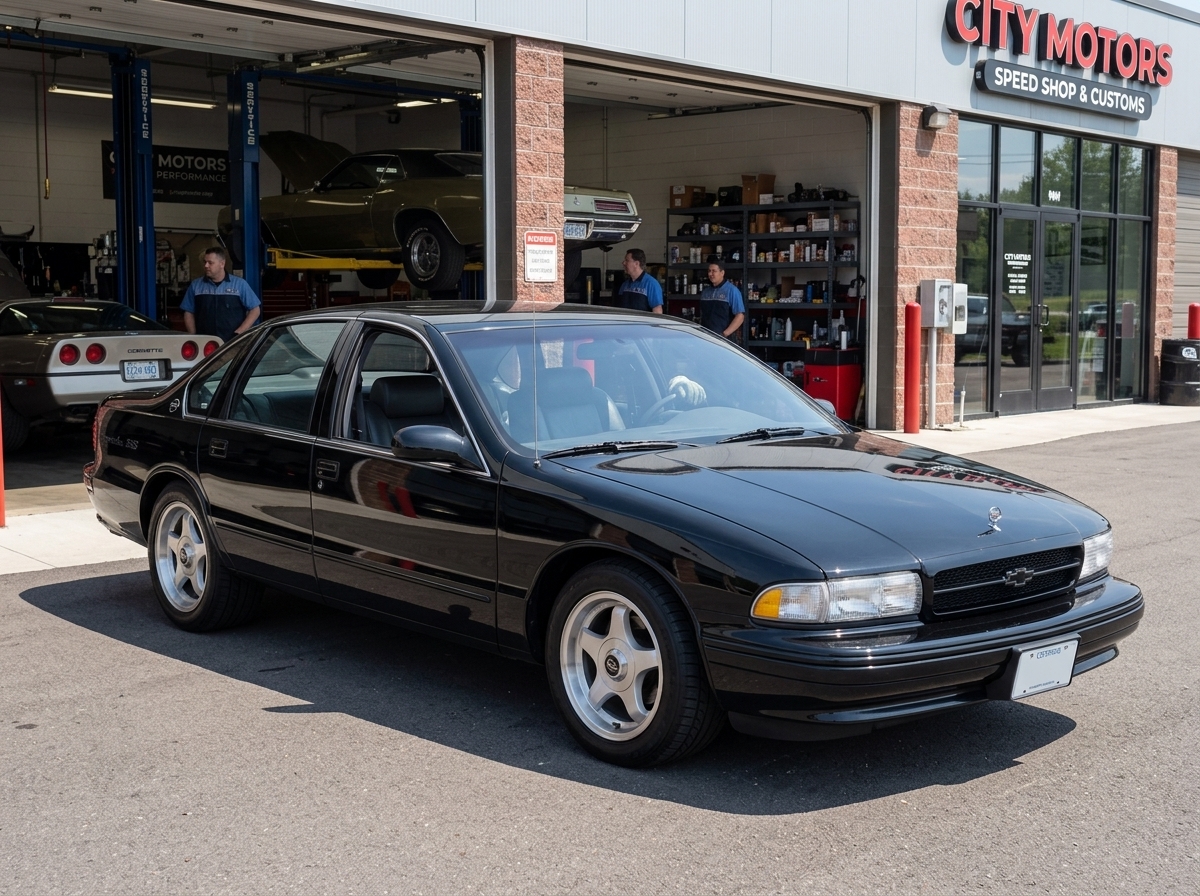 PhotoIntake day
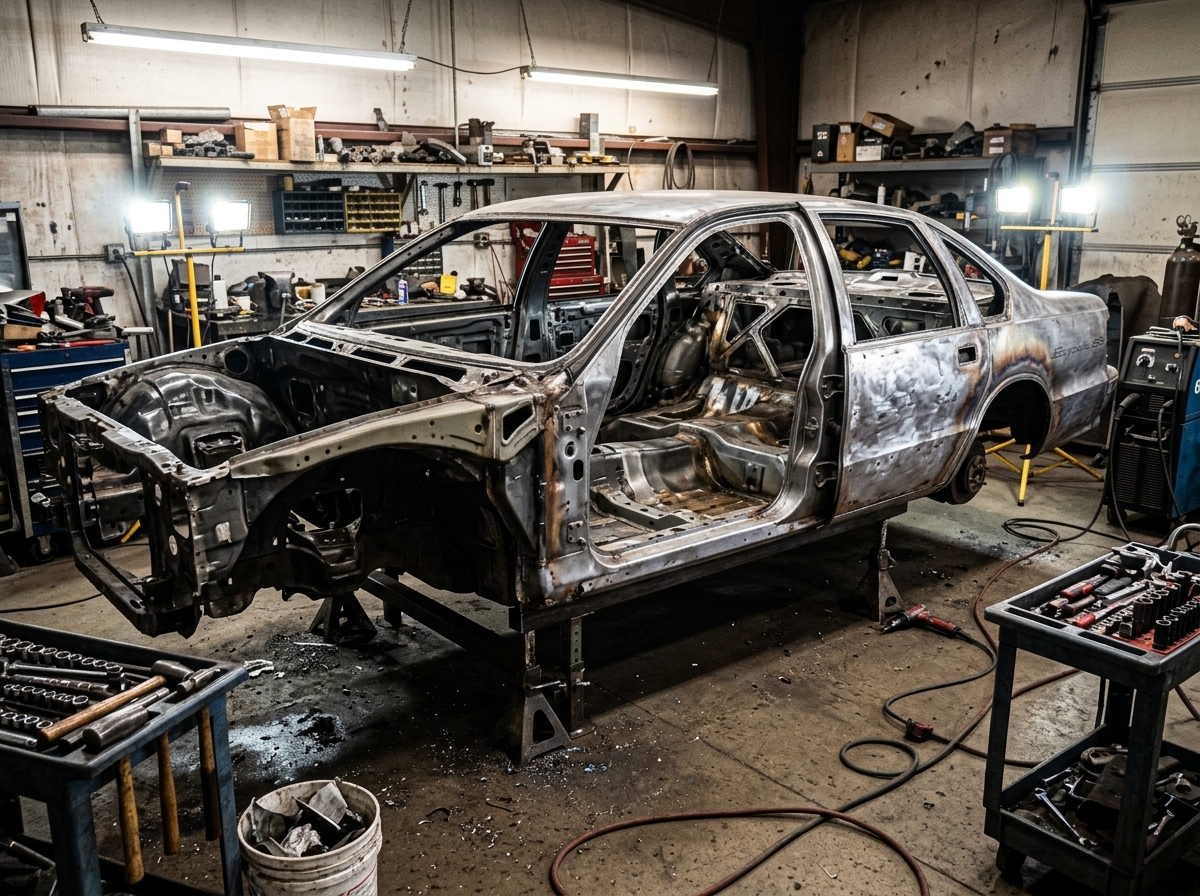 PhotoShell, stripped
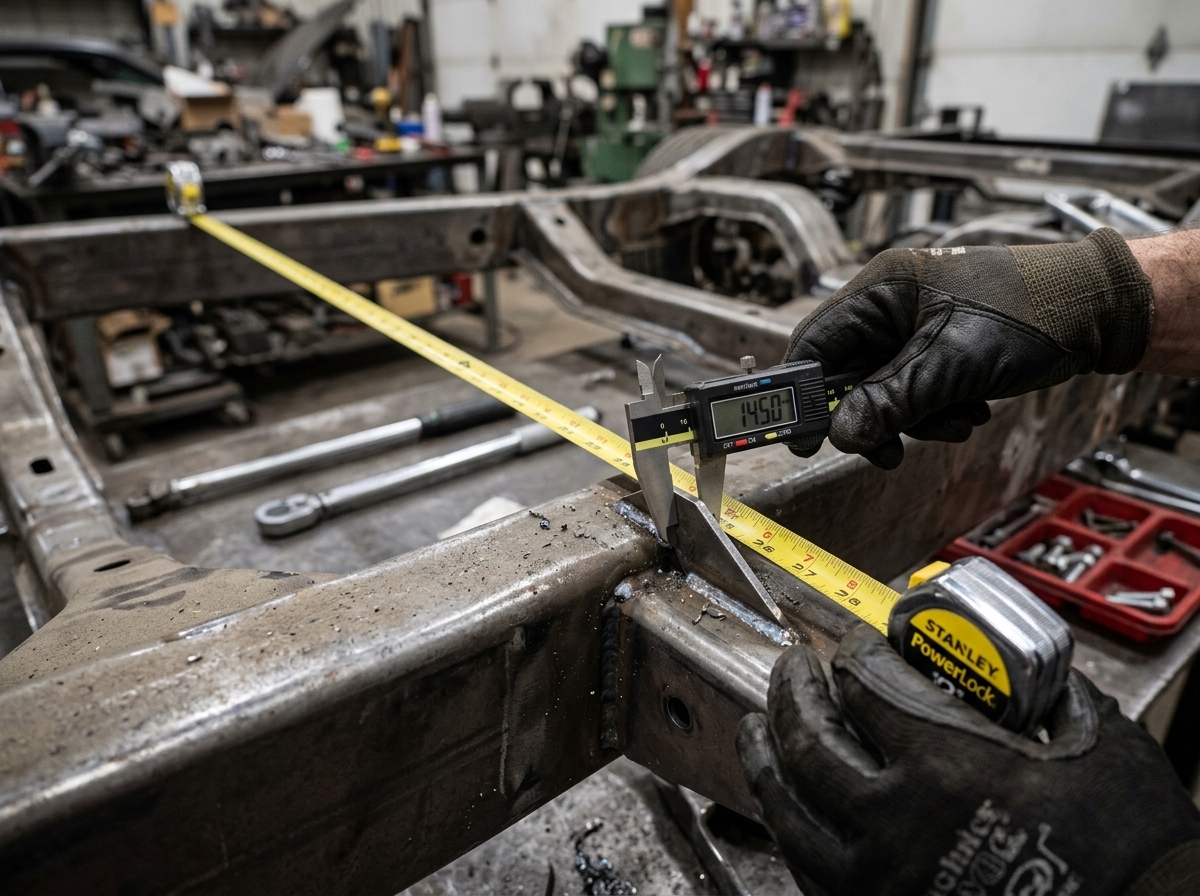 PhotoFrame measurements
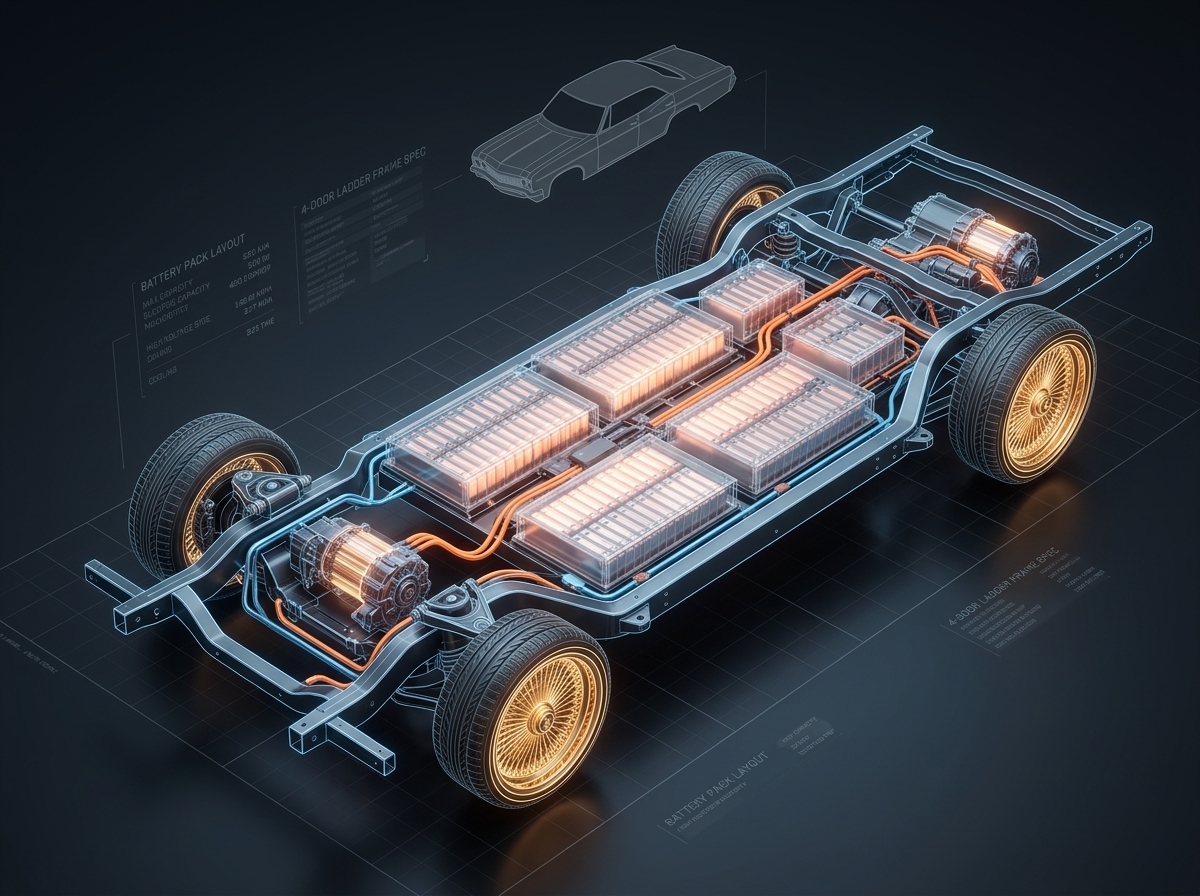 RenderPack layout mockup
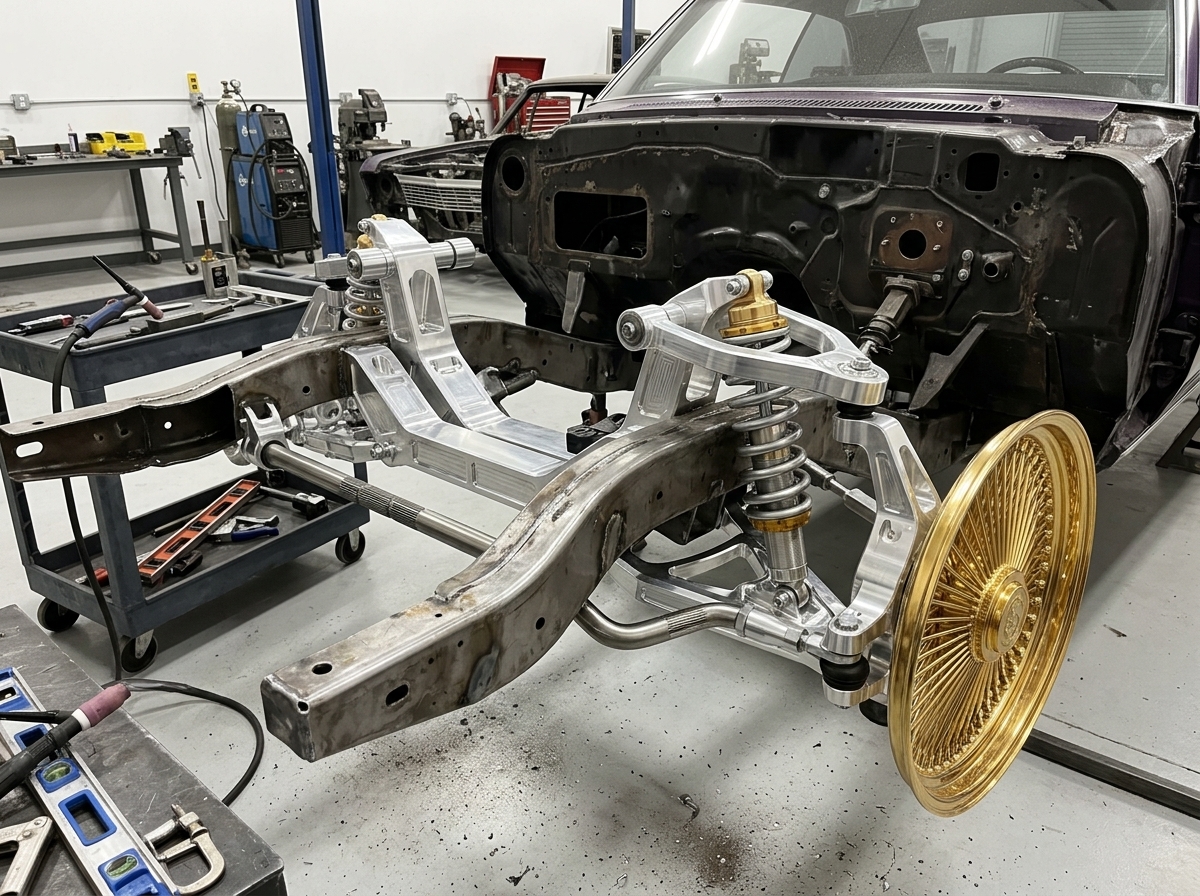 PhotoFront suspension test fit
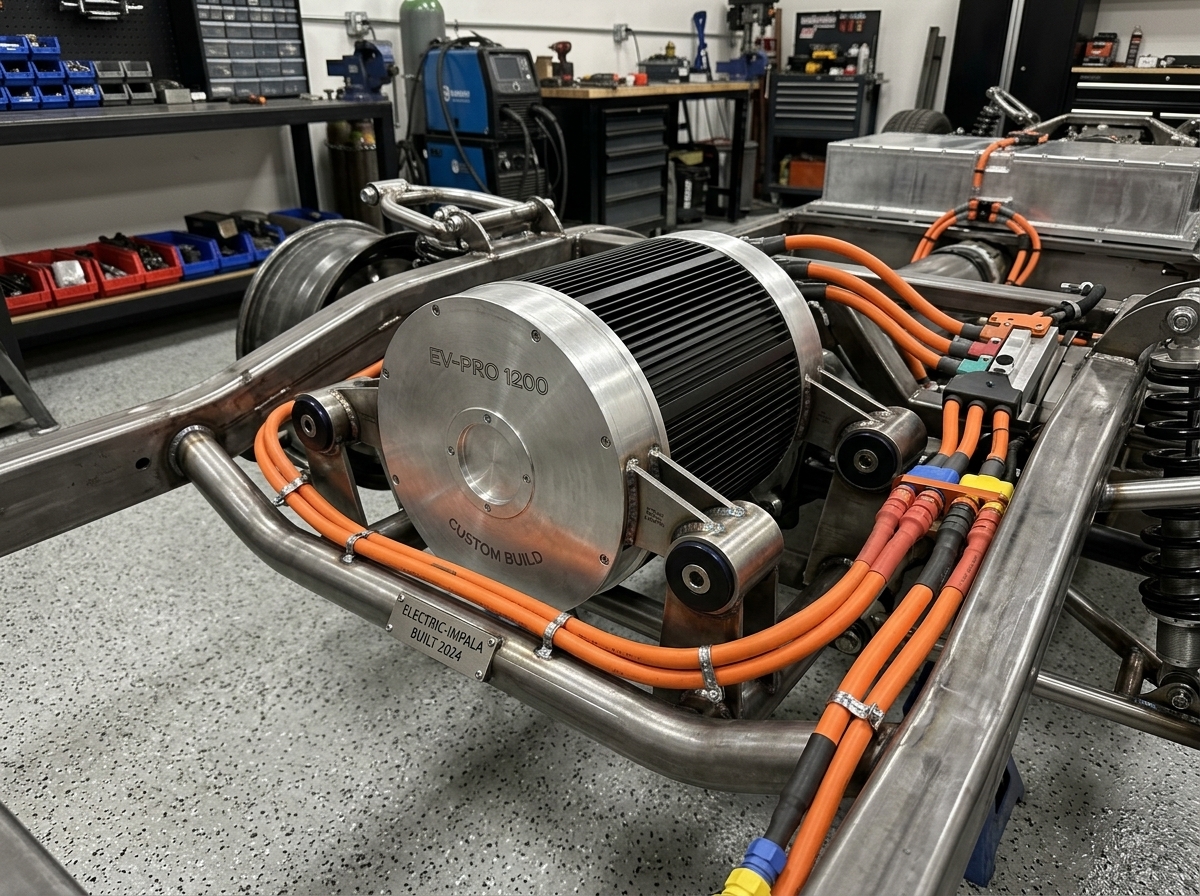 PhotoMotor and mounts
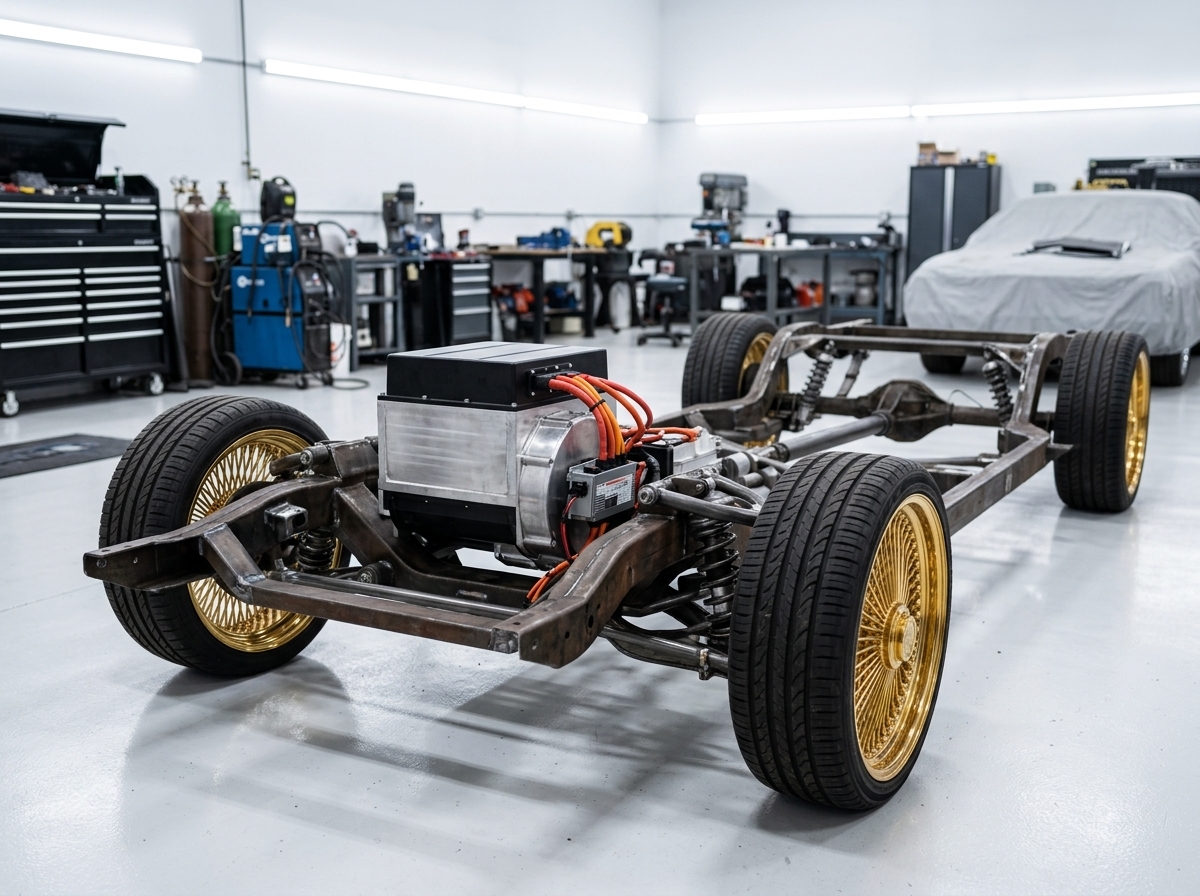 VideoFirst roll
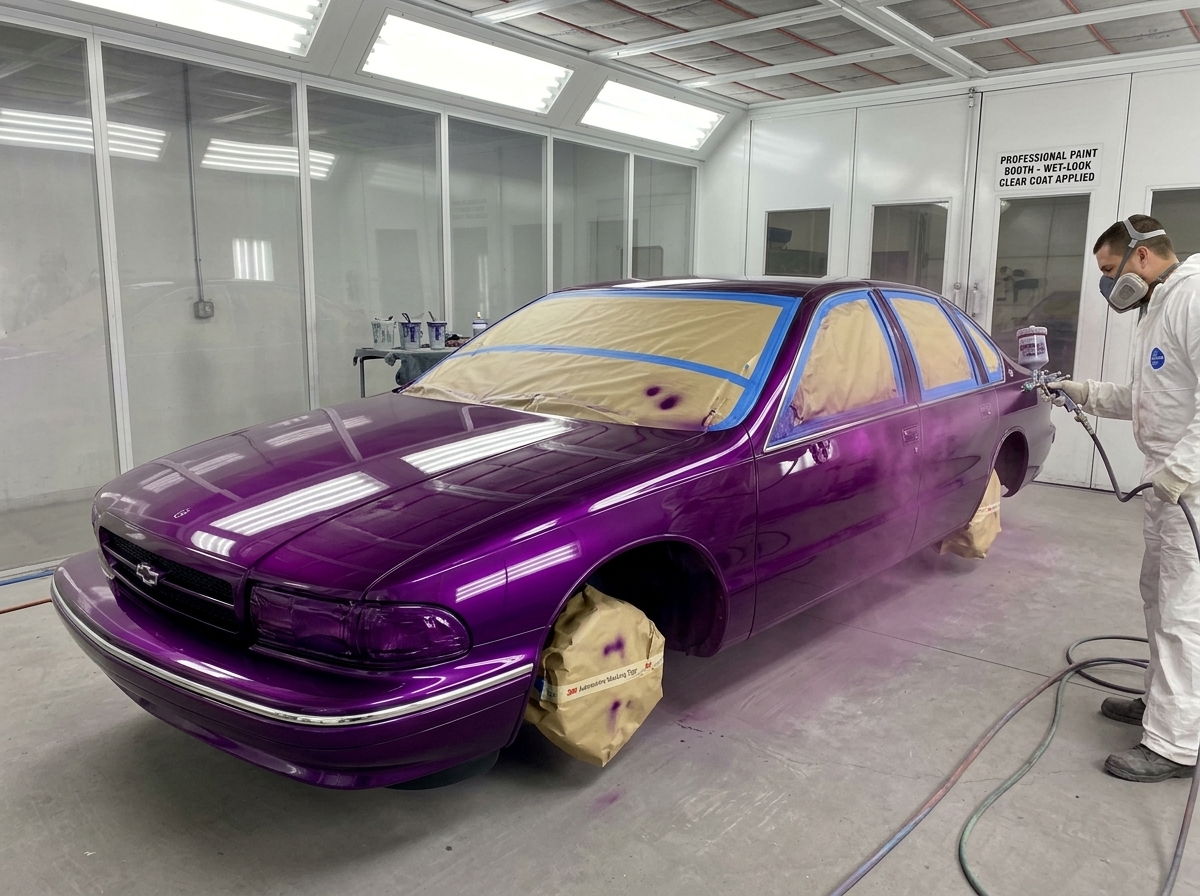 PhotoPaint booth
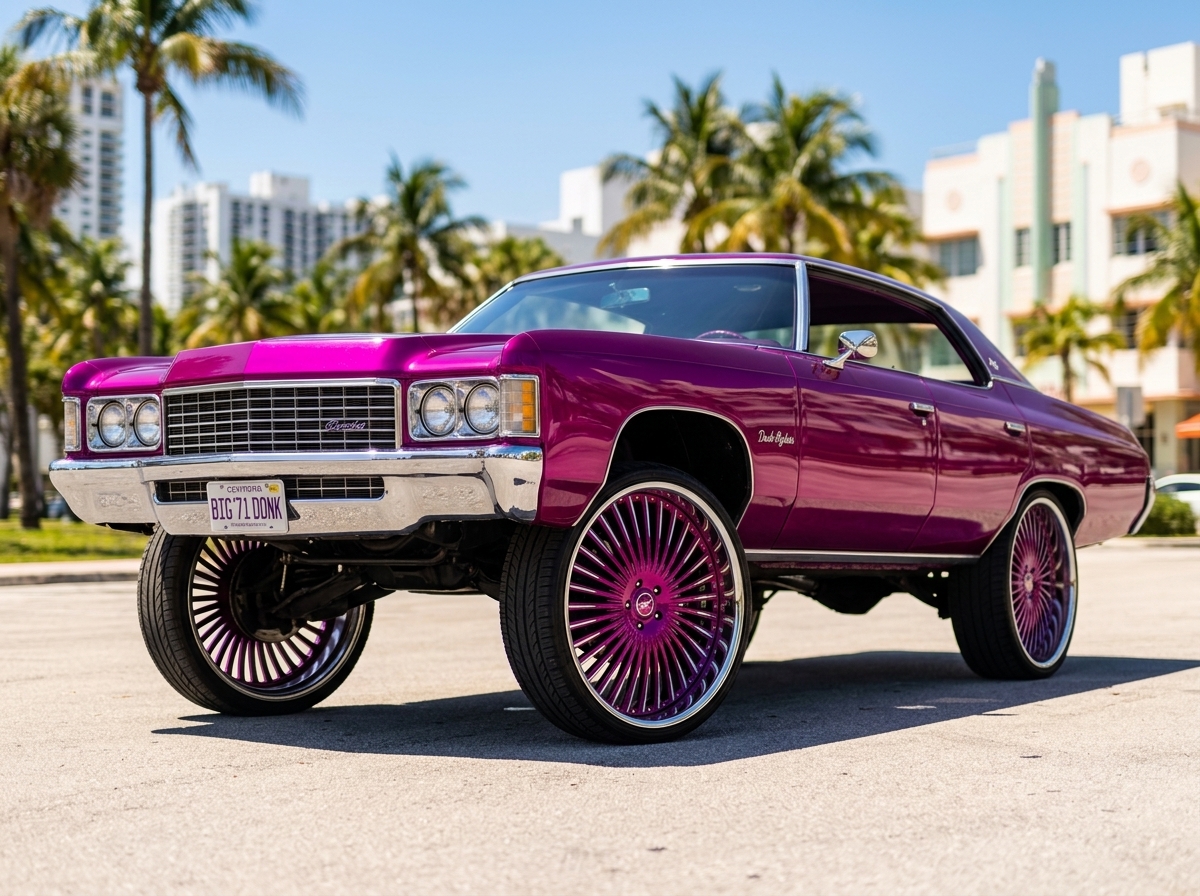 PhotoWheels on, stance check
Every tile is a real shot of this build as it happens.
Documented in the open
Build log
Newest first. Dates confirmed by EJ only.
Build log opens
Entries start here. Every phase gets written up as it happens — what worked, what got cut, what got redesigned.
Donor car secured
A 1973 Chevrolet Impala — non-running, V8 currently installed, near-zero rust. Needs a full repaint and a new interior before the build starts.
Teardown begins
Baseline photos, measurements, and the first honest look at the frame.
Entries post as EJ confirms them. Nothing here is estimated.
Yours next.
The E1 proves it. Tell us about your car and we'll tell you what it takes.
Get Your Donk Electrified